




2026年03月20日
2 分钟阅读
Rice is an Emission-Intensive Staple
Rice is a staple food across Asia and a significant contributor to agricultural greenhouse gas emissions. Reducing emissions from rice cultivation is therefore critical to addressing Scope 3 impacts for our Food business in Asian markets.
Taking Climate Actions with a Collaborative and Balanced Approach
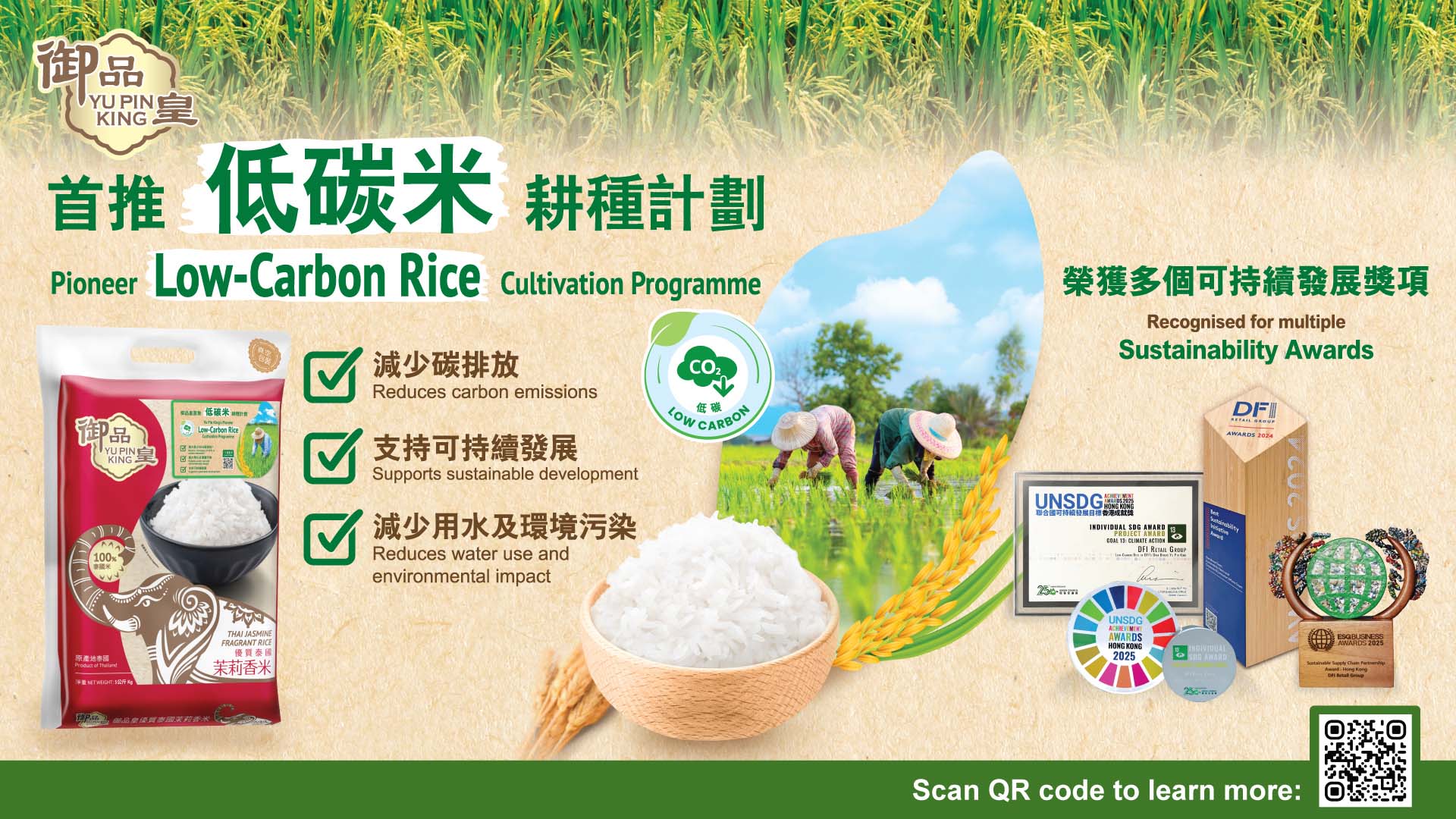
As part of DFI’s responsible sourcing strategy, the Low Carbon Rice programme demonstrates how own brand products can drive decarbonisation while supporting both farmers and customers. DFI works closely with partners including strategic suppliers, farmers, experts in agriculture, government bodies, and academic institutions, to achieve meaningful results. Our approach also balances decarbonisation efforts with production yield, product affordability, and quality, offering customers sustainable choices that promote positive impacts for both people and the environment.
Empowering Farmers to Adopt Sustainable Farming Practices
DFI works with farmers to promote low emission cultivation practices, including alternate wetting and drying irrigation, optimised fertiliser use and prohibiting straw burning. These practices support emissions reduction while strengthening climate resilience and farmer livelihoods. By pairing technical support with long term partnerships, the programme enables farmers to adopt more sustainable practices without compromising productivity or quality.
Scaling Impact through Commercial Success and Recognition
Following a pilot in Thailand that produced 380 tonnes of certified Low Carbon Rice with at least a 30% reduction in field level emissions, the 2025 product launch achieved a 25% increase in sales. Building on this momentum, DFI entered a five year partnership with Toumi Foods in 2025 targeting 1,000 tonnes of Low Carbon Rice for the Hong Kong and Macau markets by 2026.
Our efforts have been recognised with three notable awards in 2025: