




2026年03月20日
1 分钟阅读
Maintaining Food Safety While Reducing Emissions from Refrigeration
Lucky Supermarket in Cambodia operates in a warm climate market where refrigeration plays a critical role in maintaining food safety and availability. In such environments, open chiller systems can be particularly energy intensive, as they must work continuously to maintain safe temperatures.
Testing and Scaling Energy Saving Solutions
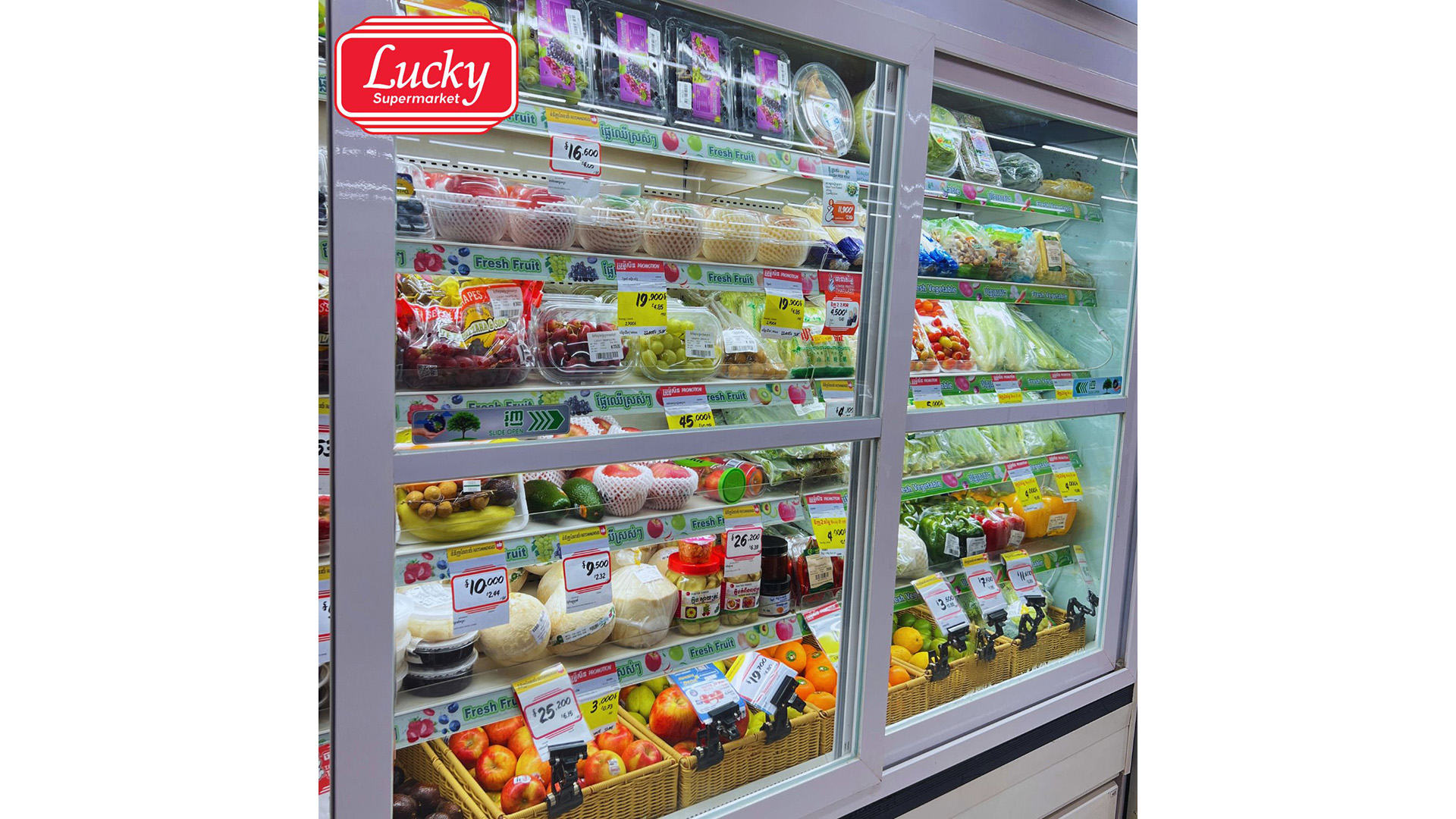
To address this challenge, Lucky Supermarket explored the use of sliding glass doors on open chiller units. The doors are designed to retain cold air within the chiller, reducing heat exchange with the surrounding environment. By limiting temperature fluctuations, the solution aims to lower refrigeration load and energy demand. A pilot was conducted at SE38 Lucky Express Kakap II to validate energy savings without compromising operational efficiency or the shopping experience.
Delivering Measurable Energy and Climate Benefits
The pilot demonstrated a clear and verified reduction in electricity use, with chiller energy consumption dropping by around 44%. Based on these results, Lucky Supermarket proceeded to expand the initiative across its store network. Between July and December 2025, 118 open chillers nationwide were upgraded with sliding glass doors.
Beyond energy savings, the project improves temperature stability, reduces strain on refrigeration systems and enhances overall operational efficiency. By taking a data driven and scalable approach, Lucky Supermarket demonstrates how practical store level improvements can deliver tangible climate benefits, reinforcing its commitment to more sustainable food retailing in Cambodia.